
Sensitive information changes hands many times across its lifecycle. Chain of custody documents those handoffs, proving who handled the data, when, where, and how. That record protects organizations against data theft, regulatory penalties, and internal mistakes. Security teams often ask how physical document destruction fits into that record. A solution is more accessible than you might guess.
On-site shredding can help you maintain chain of custody while reducing risk and simplifying compliance. Modern on-site document shredding services combine industrial-grade equipment, strict handling protocols, and verifiable documentation. The result is immediate destruction at the source, witnessed by your staff, with a clean audit trail from the moment materials leave a desk to the final recycling of material.
What Chain of Custody Means
Chain of custody is the documented path that sensitive materials take from creation to final disposition. Three elements define it: identification, security, and tracking.
- Identification: Every item or container must remain clearly labeled or otherwise identifiable throughout the process.
- Security: Access remains restricted via locked containers, controlled collection points, authenticated personnel, and secure vehicles.
- Tracking: Time stamps, signatures, or digital scans work in tandem to monitor movement and establish accountability.
Document management and destruction depend on those elements. Paper sits in secure consoles, gets transferred to locked bins, and moves under supervision to destruction. When any step lacks documentation or control, the chain breaks, and risk spikes.
Risks of a Compromised Chain of Custody
Data breaches rarely start with elite hackers; they often begin with casual mishandling. Unlocked storage rooms, open recycling bins, and unverified haulers can expose sensitive files before anyone notices. Once documents leave the premises without a record, defensibility evaporates.
Unauthorized exposure can trigger mandatory notifications, forensic investigations, and operational disruptions. Regulators enforce standards like HIPAA, GLBA, and FACTA, and penalties can compound per record. Insurance providers may question coverage if protocols were ignored, and plaintiffs’ attorneys will look for gaps in the trail.
Reputation suffers long after fines are paid. Clients expect disciplined handling of their information. Vendors and partners evaluate security posture before signing. A single lapse can stall deals, raise procurement hurdles, and reduce lifetime customer value.
How On-Site Shredding Works
On-site shredding brings a mobile destruction facility to your location. Trained, background-checked technicians arrive in a secure shredding truck. Materials remain inside locked consoles or collection bins until transfer, reducing touchpoints and exposure.
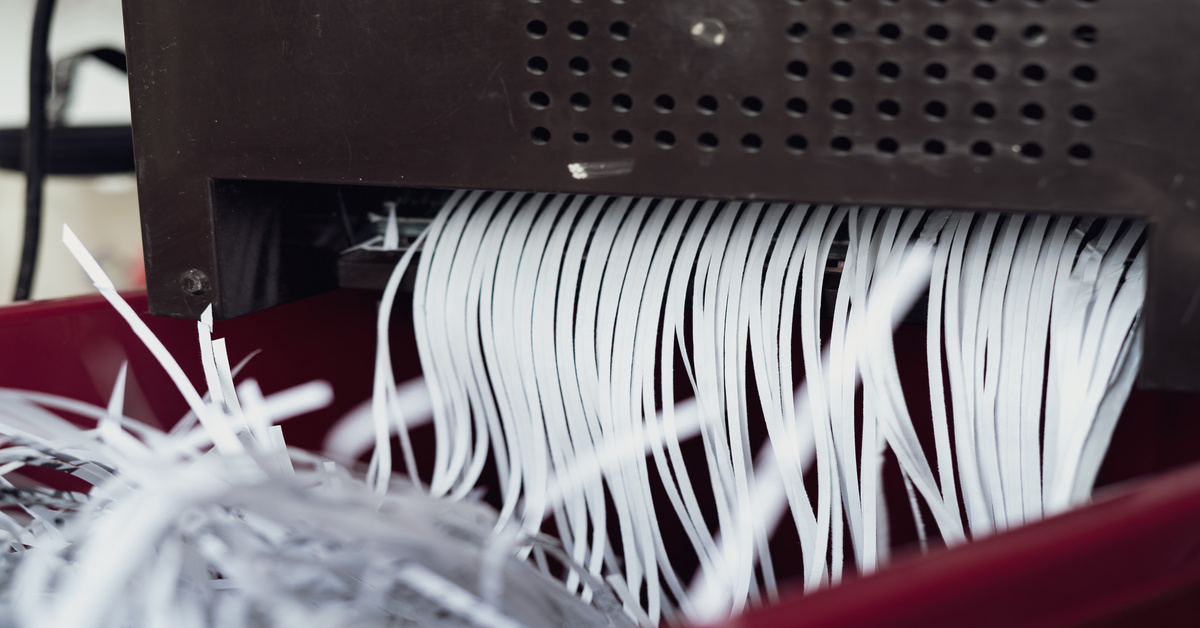
Technicians roll sealed bins straight to the truck’s hopper. Industrial cross-cut or micro-cut blades render documents irrecoverable within seconds. Many trucks include a live video monitor, so your staff can watch materials being shredded in real time. That visibility reinforces trust and supports internal compliance.
IntelliSHRED’s on-site process makes it even simpler. Teams accept staples, paper clips, folders, and three-ring binders, eliminating time-consuming prep work for your staff. Our experts shred these on the truck while you watch, and we issue a Certificate of Destruction when the job is complete. Shredded fiber is then sent for recycling, supporting sustainability goals without compromising security.
Benefits of On-Site Shredding for Maintaining Chain of Custody
Direct Control and Witnessing
Staff maintain custody until the moment of destruction. Witnessed shredding closes the loop, turning “we handed it off” into “we saw it destroyed.” The audit trail includes your verification, technician sign-offs, and time-stamped records.
Minimizing Transportation Risks
Off-site hauling introduces transport exposure and extra handoffs. On-site shredding eliminates long-distance transport for intact documents. Materials move a few feet from locked bins to the truck’s hopper, reducing opportunities for diversion or loss.
Compliance With Federal and State Regulations
Regulated organizations need procedures that match enforcement expectations, not assumptions. On-site shredding supports HIPAA, GLBA, FACTA, and state privacy laws by enforcing limited access, documented handling, and immediate destruction. Policy owners can map each control directly to legal requirements and internal standards.
Certificate of Destruction
A Certificate of Destruction completes the chain. That document details the date, time, method, location, and volumes destroyed. Auditors and regulators accept it as proof of compliant disposition. If questions arise, you can produce verifiable evidence within minutes.
Best Practices for Implementing On-Site Shredding
- Employee training: Teach teams what belongs in secure consoles, how to recognize sensitive records, and when destruction is necessary.
- Scheduled shredding services: Establish routine pickup cadences that prevent overflow and reduce ad hoc handling.
- Secure storage containers: Use locked consoles or bins in high-traffic areas, and restrict key access to authorized staff.
- Regular audits: Review custody logs, service records, and Certificates of Destruction, and reconcile volumes against retention schedules.
Why On-Site Shredding Strengthens the Entire Program
Records management policies only work when daily behavior matches the written plan. On-site shredding reduces friction, which improves compliance rates across departments. Staff can drop files in a secure console and get back to work instead of wrestling with a desktop shredder or doing box runs.
Operational clarity matters as much as cutting power. Clear signage on consoles, visible service schedules, and standardized procedures keep everyone aligned. Security leaders gain measurable controls, and business leaders gain measurable efficiency.
On-site document shredding services also simplify litigation holds and retention schedules. Teams can pause destruction for specific records while routine shredding continues for everything else. This capability preserves legal defensibility without slowing operations across the board.
What To Look For in a Shredding Partner
Provider selection affects both security and experience. A provider’s credentials should include background-checked personnel, documented chain-of-custody procedures, and secure vehicles. Equipment should meet or exceed industry destruction standards, with cross-cut or micro-cut capabilities.
Documentation processes should also be thorough. Look for detailed Certificates of Destruction and service logs that align with your audit requirements.
Sustainability Without Compromising Security
Shredded paper still supports circularity goals. Reputable providers bale shredded fiber for responsible recycling under documented controls. Your sustainability reports gain credible inputs, and your privacy program maintains uncompromising standards.
Electronic media introduces different risks, yet the same principle applies. Hard drives and other storage devices should be destroyed on-site whenever feasible, with serial numbers logged and destruction verified. That continuity preserves the chain of custody across both paper and digital assets.
Secure Your Data Today
Chain of custody transforms document destruction from a task into a defendable control. On-site shredding tightens that control by eliminating transport exposure, reducing touchpoints, and providing witnessed destruction. Most importantly, it yields documentation that stands up in audits, investigations, and boardrooms.
Organizations ready to close gaps can implement a program in days, not months. Clear policies, scheduled pickups, and verifiable destruction bring predictability to a function that often stalls. With effective shredding strategies, your team gains time, your risk posture improves, and your customers gain confidence.
Finish strong with on-site shredding that helps you maintain the chain of custody across every stage of a document’s lifecycle. Contact IntelliSHRED to schedule secure, dependable on-site document shredding services and receive a Certificate of Destruction before our crew leaves your site. Get a quick quote and make plans to protect your business.