
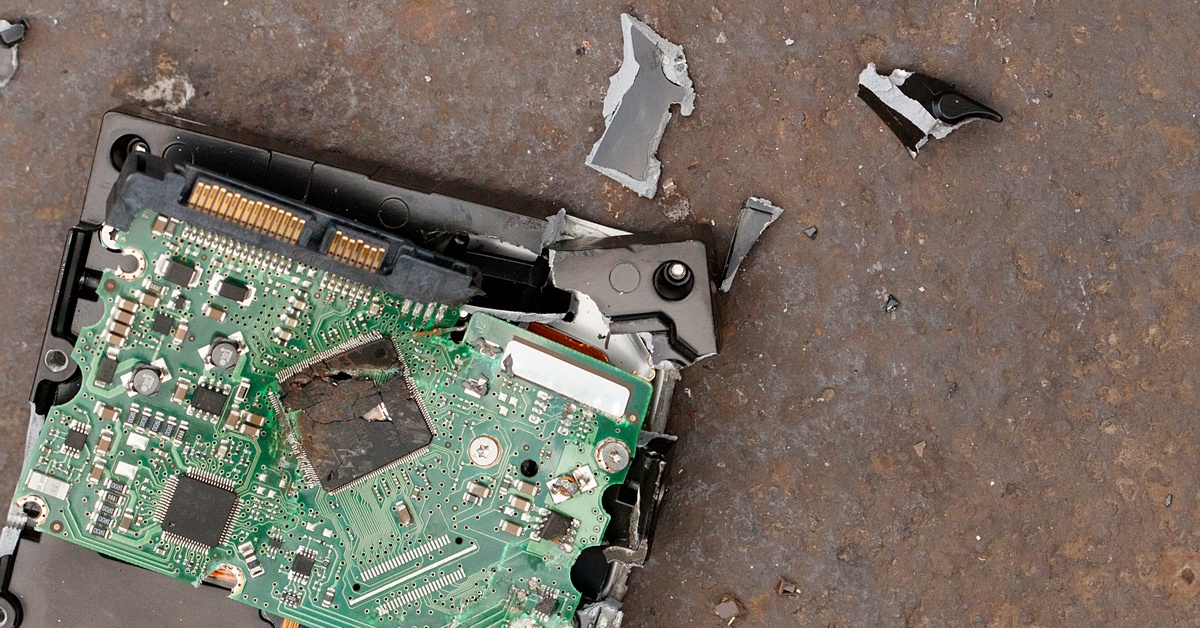
Old devices feel harmless because they sit quietly on shelves, yet they still carry the most sensitive parts of your business. Client lists, invoices, HR files, saved passwords, and system logs can remain on a drive long after someone “deleted” them. That reality explains the importance of hard drive destruction. When you want clarity, accountability, and a clean endpoint for data you can no longer afford to protect, destruction is the option.
Why ‘Deleting’ Data Doesn’t End the Risk
Deleting a file removes the easy access path, yet it rarely removes the underlying data immediately. Your computer marks the storage space as available and waits for new data to overwrite it, which means recovery tools can reconstruct information that appeared to be gone.
Factory resets also leave room for mistakes when someone interrupts the process, skips certain partitions, or relies on default settings that do not match your security needs. As a result, disposal becomes a security decision, and your organization benefits when you treat it with the same seriousness as access control.
Recovery Tools Keep Getting More Accessible
Data recovery no longer requires a lab or a specialist with custom equipment. Many recovery tools run through a simple interface, and a motivated person can test multiple methods until something surfaces. That ease matters because it lowers the barrier for misuse, particularly when retired drives land in secondary markets or sit in unsecured storage.
Additionally, attackers do not need every file to cause harm. A partial export, a cached email thread, or an old password vault can create enough leverage to trigger fraud, reputational damage, or mandatory notifications.
Sensitive Data Hides Beyond Files and Folders
Documents represent only one slice of what a drive stores. Browsers keep autofill details and cookies, collaboration tools cache conversations and attachments, and operating systems maintain logs that reveal usernames, network paths, and device history.
Some business applications may keep local databases that retain records even when users remove them inside the app. Hard drive destruction gives you a direct, clear removal.
Compliance, Contracts and Customer Trust
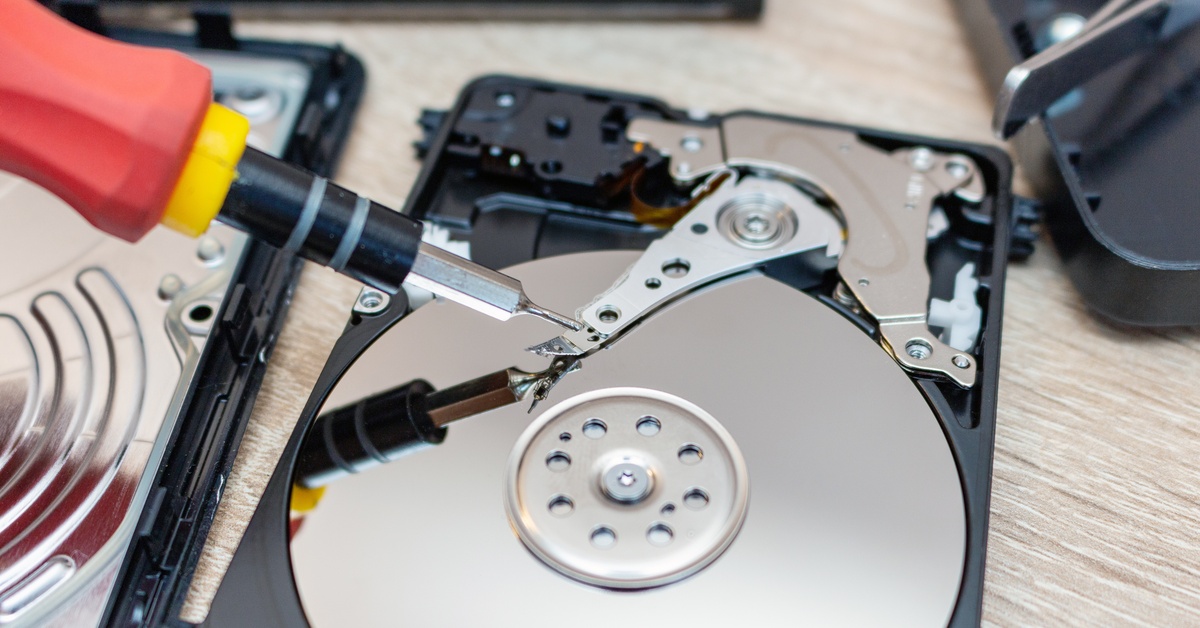
Regulators and business partners care about outcomes, documentation, and reasonable safeguards. When a drive leaves your custody with recoverable data, you may trigger breach reporting requirements, contractual penalties, or failed audits, even if nobody proves misuse.
Moreover, procurement teams increasingly ask for clear evidence of disposal practices as part of vendor due diligence. Hard drive destruction supports that expectation because it produces a repeatable process, a traceable chain of custody, and documentation that you can present without vague assurances.
Chain of Custody
A drive that moves through multiple hands creates uncertainty, and uncertainty creates risk you cannot quantify. It might sit in a staging room, ride with a general recycler, or pass through an employee who means well but lacks training. Each step expands the pool of possible access points, making your security posture harder to defend.
Additionally, many contracts require protection through disposal, not only during active use. When you track devices, control transfers, and document destruction, you reduce guesswork and strengthen your position during audits or incident reviews.
Reputation Loss When Disposal Fails
A disposal-related data exposure is preventable, and people judge preventable mistakes harshly. Customers expect you to protect their information from start to finish, which includes what happens when hardware reaches the end of life.
You may lose deals, face churn, and spend months rebuilding credibility with stakeholders who expected basic controls. Hard drive destruction gives you a clear line you can communicate internally and externally: retired storage media never becomes someone else’s opportunity to extract your data.
Destruction vs. Sanitization
Some organizations choose to sanitize data to reuse drives or return leased equipment. That approach can work, but it demands disciplined execution, verification, and documentation tailored to the specific media type.
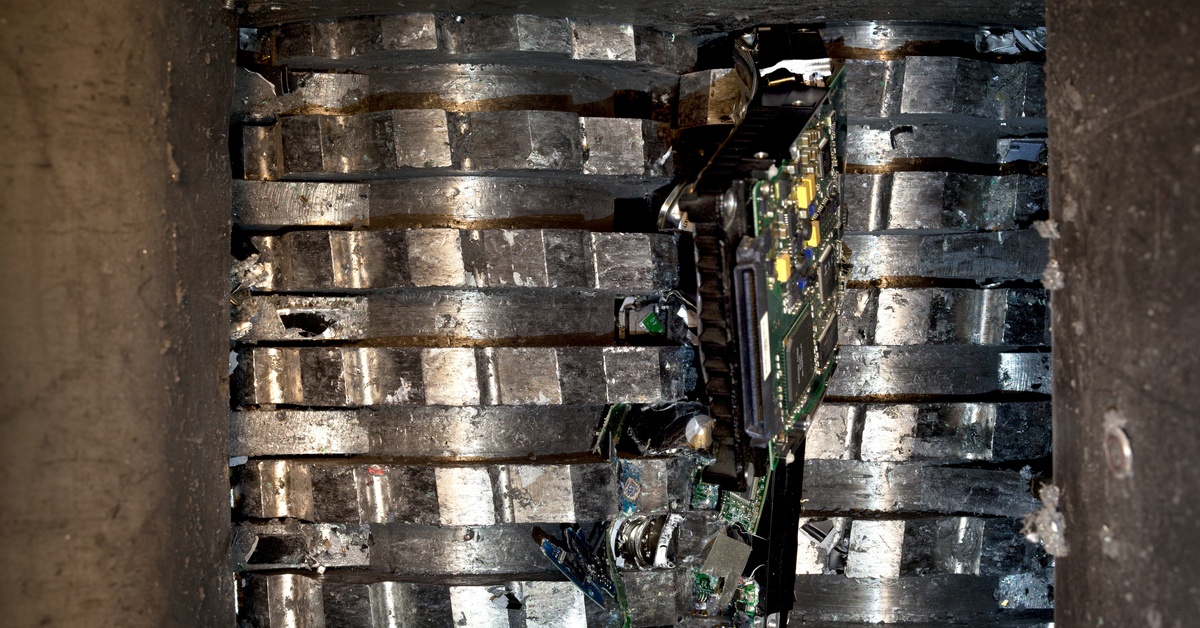
Physical destruction trades reuse for finality, which many teams prefer when they value certainty and speed over asset recovery. Therefore, the decision hinges on your risk tolerance, your operational maturity, and the sensitivity of the data that lives on the drive. A transparent security program explains those tradeoffs rather than pretending one method fits every situation.
When Sanitization Fits Your Operational Reality
Sanitization makes sense when you maintain tight control over the entire process and can verify the results. Verification matters because a wipe without proof becomes a belief rather than a security control. Solid-state drives can also introduce complexity through wear-leveling and hidden reserved space, which can prevent a simple overwrite from touching every storage cell.
That means your tools and procedures must match the drive technology you manage. When you choose sanitization, pair it with clear logs, automated reporting, and periodic spot checks to maintain consistent quality.
When Destruction Becomes the Stronger Choice
Destruction fits best when drives contain highly sensitive information, when you face failed hardware that will not wipe cleanly, or when you need a scalable approach that reduces human error. It also helps when your organization cannot confidently validate wiping across hundreds or thousands of assets.
Moreover, destruction simplifies your end-of-life story by removing ambiguity about hidden partitions, incomplete resets, or skipped steps. You act once, you document it, and you eliminate the anxiety that tends to linger after sanitization.
Documentation Turns Security Into Proof
A certificate of destruction helps you demonstrate completion, yet you should treat it as one piece of a broader evidence trail. Maintain internal records that connect the certificate to specific devices and serial numbers, and include the destruction method, date, and verifier.
Additionally, consider witnessing destruction for the most sensitive media, either in person or through recorded sessions, depending on your risk profile. Transparent documentation supports audits, reduces disputes, and helps leadership understand exactly how you manage end-of-life risk without relying on vague statements or implied trust.
Transparent, Secure Data Deletion
Security does not end when a device powers down for the last time. Your responsibility continues until you eliminate the data footprint in a way you can defend, document, and explain to customers, auditors, and partners.
When you treat retired drives as sensitive assets until the moment you destroy them, you reduce legal exposure, protect trust, and simplify your end-of-life workflow. This practical approach shows the importance of hard drive destruction. It becomes a routine safeguard rather than a preventable risk.
Intellishred offers reliable, in-person hard drive destruction so that you can take the uncertainty out of device disposal. Witness the destruction yourself and ensure the data is securely destroyed. With clear chain-of-custody handling and documentation that supports audits and compliance reviews, you leave nothing to chance. Reach out to Intellishred today to schedule a witnessed destruction service and close the loop on retired drives with ease.